

Table of Contents | Article doi: 10.17742/IMAGE.VT.11.3.7 | PDF
How many Authors does Finland have? The Frankfurt Book Fair as a Platform for the Export of Literature and Culture
The Frankfurt Book Fair is the world’s largest media and literature event. It is an interface between the fields of literature, politics, and economics. Its significance for book exporting and license trading is obvious. The Frankfurt Book Fair is an important marketplace and therefore plays a crucial role in the international book industry. To vary its focus, the Frankfurt Book Fair annually chooses a country as its Guest of Honour to present its literature and culture. The Guest of Honour is the main attraction for the visitors and the media. Over 40 percent of the entire program falls upon the guest country (Weidhaas 285–90; Niemeier 106). The book fair is seen and studied as a trading venue for the literary market and as a platform for political discussions (Niemeier; Kölling).
Finland had the opportunity to be the Guest of Honour of the Frankfurt Book Fair in 2014. Finland’s presentation at the Book Fair consisted of 60 authors, over 130 books translated into German, and 600 organised events. With the presentation, Finland aimed to increase the sales of translation rights. Furthermore, the project aimed for broader coverage and recognition of Finnish culture.
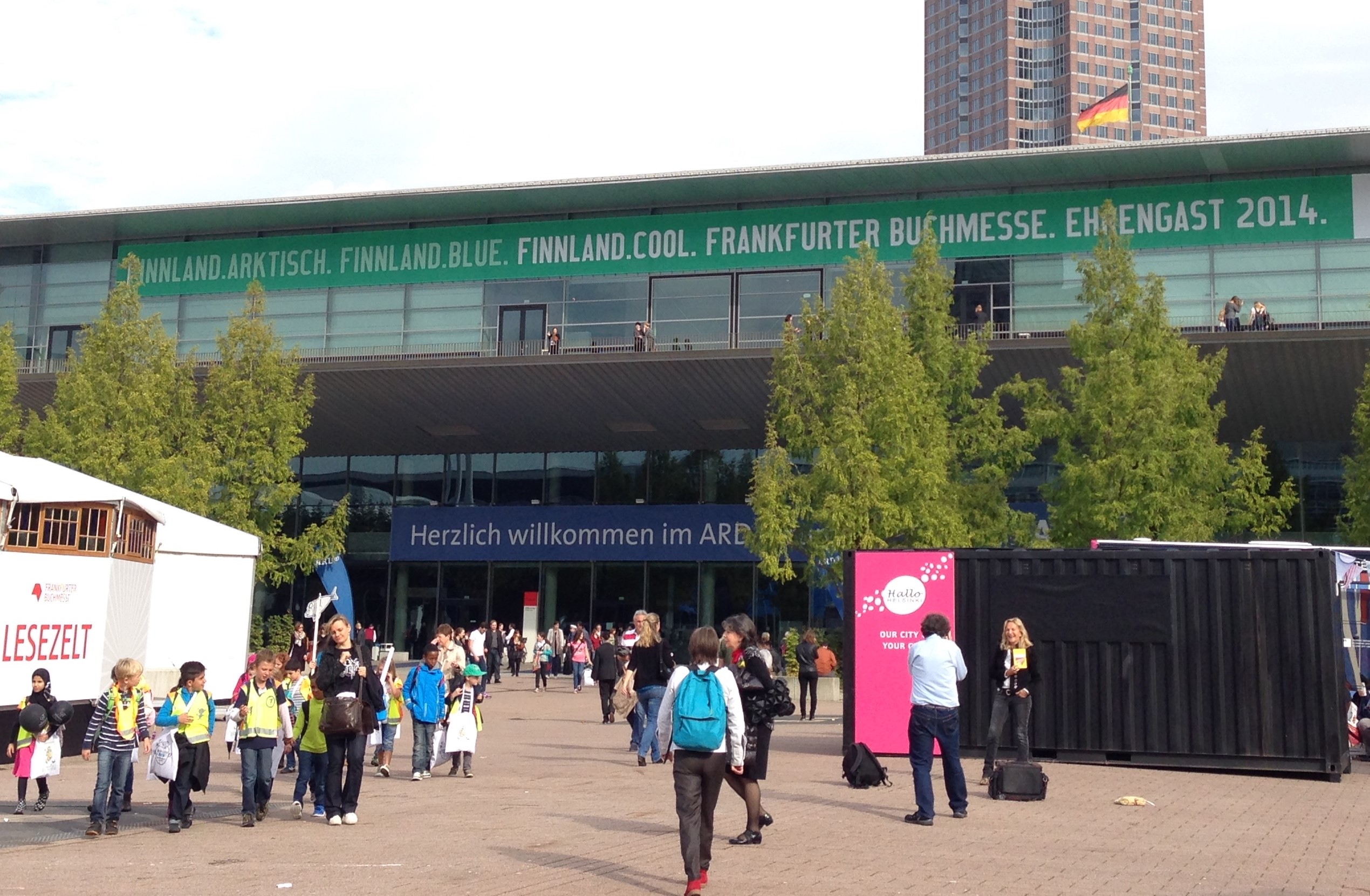
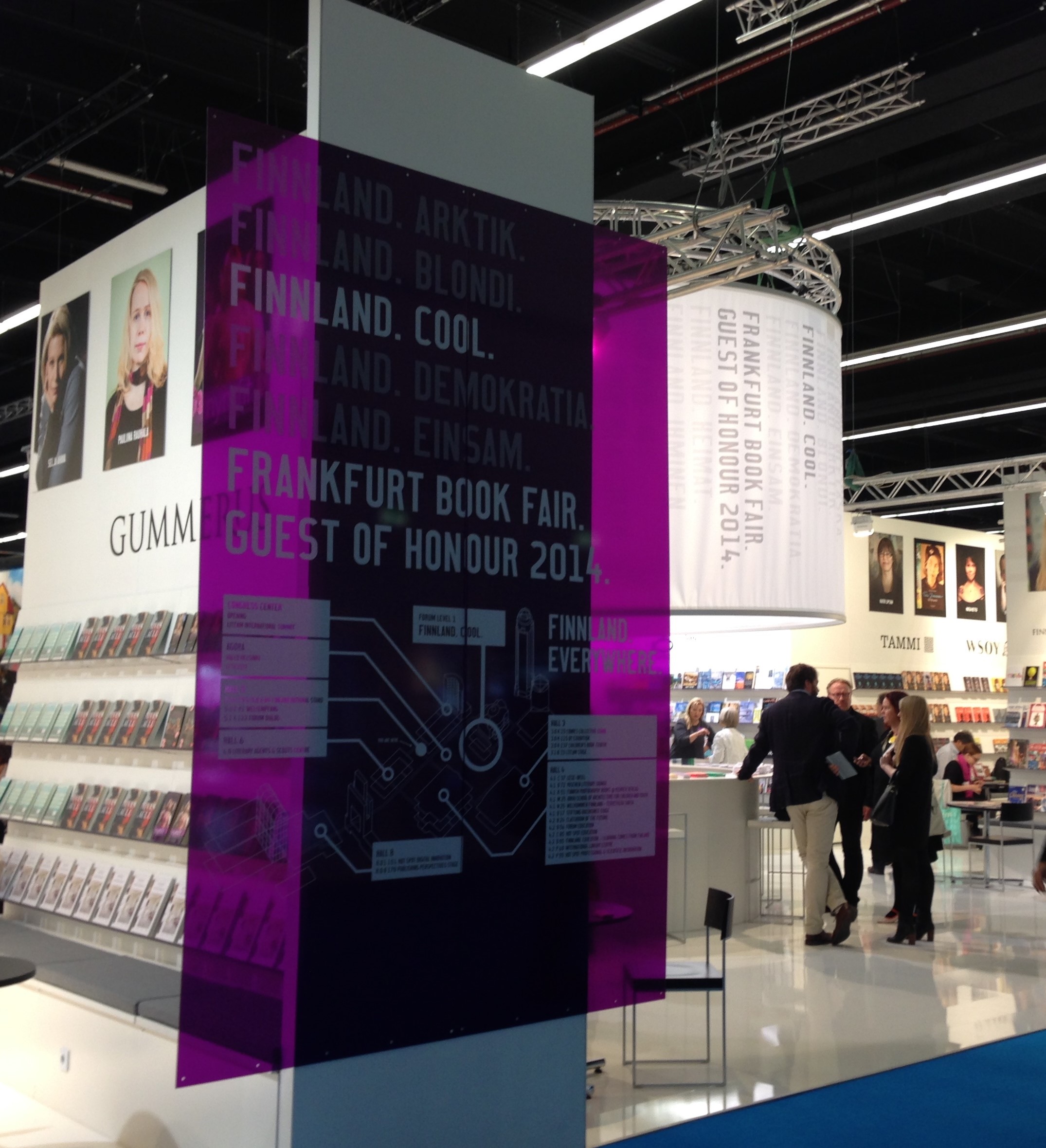
This article is based on a study I did for my dissertation FINNLAND.COOL. – Zwischen Literaturexport and Imagepflege. Eine Untersuchung von Finnlands Ehrengastauftritt auf der Frankfurter Buchmesse 2014 (FINNLAND.COOL. – Between Literature Export and Image Cultivation. A Study of Finland’s Guest of Honour Presentation at the Frankfurt Book Fair 2014). In this article, I observe Finland’s performance as the Guest of Honour to find out what kind of a platform the Frankfurt Book Fair is and what the Guest of Honour status provides for exporting literature and culture. To do this, I examine Finland’s project from the planning stage to the actual presentation.
If one applies Pierre Bourdieu’s concept of relative autonomy to Finland’s field of literary production, it will fail to measure up, as Finnish literature, because of its young age, lacks independence from other societal fields, such as the economic or the political field (Bourdieu, The Rules of Art and Distinction). From very early on, the German literature and academic tradition of the 17th and 18th centuries had an impact on the development of the Finnish literary field. The Finnish book market started to form only in the late 19th and early 20th century (Körkkö, “Finnische Literatur” 28–29). Pascale Casanova sees the autonomization of the literary field, or the world literary space, as she calls it, as a “direct product of history” (Casanova 82). The older and stronger the internal structure is, the more autonomous is the field. The Finnish literary field lacks this internal structure and strength. Since the older and stronger literatures are the first to enter the international competition, they are also as a result more significant and powerful in the international field.
It is of great importance that literature exports not only be observed from an economic point of view since they also involve a process of cultural transfer. This is a dynamic process based on transfer of goods, ideas, or meanings between different cultural regions (Kortländer 3–5, 24; Lüsebrink 129–30). It is also a process of value judgements that exclude some literatures and include others. To explore the Guest of Honour status and the Frankfurt Book Fair as a platform for literature exporting, one therefore has to pay attention to both the economic and the cultural aspects of the literary field. By following Finland’s Guest of Honour presentation and examining the field of cultural production and more precisely the literary field, I ask whether the relative autonomy of Bourdieu’s literary field is even feasible at such an event as the book fair, where economic interests tend to rule.
Finland as the Guest of Honour
Every year the Frankfurt Book Fair brings together the agents of the international literary field with over 7,000 exhibitioners and about 300,000 visitors from over 100 countries. Since 1988 the book fair has chosen a country or a region to present its literature and culture in the Guest of Honour pavilion at the fair and in numerous events in Frankfurt. The guest country is present all over Germany through a wide cultural program, reading tours, and increased visibility in bookshops.
The role of the Guest of Honour is a widely discussed topic. The presentation provides a possibility to increase license trade and to gain visibility in the international book industry. Both the book fair and the concept of the guest country are multifunctional (Niemeier 63–77; Kölling). The presentation is used as an image or a tourism campaign as well as an opportunity to increase cultural exports. It has been even described as a self-discovery process for the guest country (Fischer 162).
According to the book fair organization, the idea behind the presentation is “to help the publishing industry and the cultural institutions of the guest country to network more effectively on an international scale, to make its literature better known around the world, and to increase the number of translations emerging from the country” (“Guest of Honour”). How the presentation is implemented is up to the guest country.

Finland struggles with the fact that other Nordic countries have managed their literature exports better. In Germany, which is often seen as a gateway to other European book markets, Swedish literature, for example, is among the ten most translated literatures (Buch und Buchhandel). Even though German traditionally is the most translated language for Finnish literature, Finland had barely reached the top-20 most-translated languages in Germany before the Guest of Honour presentation (“Herkunftssprachen der Übersetzungen für den deutschen Buchmarkt im Jahr 2015”). This stems from the rather short history of Finland’s cultural exports. In the international literary field where the older literatures have gained a more central position, Finnish literature is still at the periphery. The importance of cultural exports was for a long time not recognized in Finnish cultural politics. The significance of cultural exports for building the image of the country was not taken seriously and, therefore, was not given economic value (Siikala 220–22).
The Guest of Honour project was in many ways Finland’s largest cultural-export project of all time. The first application to be the 2011 Guest of Honour was submitted in 2007 as part of a reform in Finnish cultural politics. The Ministry of Education and Culture stated that cultural exports could be the key in refreshing the image of Finland, as the products of the creative industries seemed to be in great demand abroad (Koivunen 15–16). This first application, however, was not successful, as Iceland was chosen over Finland (Körkkö, FINNLAND.COOL 84).
The 2007 application process prompted a discussion in both the German and the Finnish media on the criteria used by the book fair when choosing the guest country. During the application period, the Finnish Nokia group closed a factory in the German city of Bochum. This initiated protests in Germany. Shortly thereafter, it was announced that Iceland would become the Guest of Honour in 2011. The German media speculated whether the decision was based solely on literary merit (Wittstock). The Frankfurt Book Fair contested the claim and stated that the political and societal discussions in the wake of the Bochum case did not affect their decision to choose Iceland (“Island wird Ehrengast”). In 2009, it was decided that Finland would be the Guest of Honour in 2014.
Between Literary Export and Image Cultivation
The challenge for the Guest of Honour is finding a balance between the different contents of the presentation. Since some of the previous guest countries had been criticised in German media for focusing more on nation-branding rather than representing literature, Finland wanted to emphasize literature and books in their presentation.
The Finnish project was led by FILI – Finnish Literature Exchange, but the organizational structure was a collaboration of actors from public, private, and voluntary sectors, representing publishers, authors, government, cultural institutions, and financial institutions (Körkkö, FINNLAND.COOL, 107–109). Finland presented its culture and literature under the slogan “Finnland. Cool.” According to Finland’s strategy, the Frankfurt 2014 presentation was an export project not only for Finnish literature but also for Finland’s accomplishments in education and literacy (“Finnland. Cool. Strategy.”). The aims given in the strategy were permanent growth in sales of translational rights, a tighter network among art and culture institutions, and a better-known Finland through the cultural program (“Finnland. Cool. Strategy.”). In the presentation, the Finnish organization wanted to avoid a stereotypical approach to nation-branding.

The multilingual and ambiguous logo was designed to emphasize the two official languages, Finnish and Swedish, but also the cool aspect of the North (“Finnland. Cool.”). At the exhibition site, the Guest of Honour had a 2300m² pavilion to use for the presentation. The Finnish pavilion was designed by a group of architecture students at Aalto University. The white surfaces and cylinders in the pavilion were planned in accordance with the idea of “cool[ness]” promoted by the slogan.

“Finland is nature, pure and clear,” wrote the Frankfurter Allgemeine Zeitung newspaper after visiting the pavilion at the book fair (Hierholzer, translation mine).1 The Finnish organisers deliberately avoided nation-branding and conveying Finland stereotypes and underlined the importance of literature, reading, and education in the presentation instead. Yet, the presentation was in the end still a form of nation-branding. The more the German media wrote about stereotypical Finland, the more the organisers went ahead and also cultivated this image.
This question of whether the project was primarily a project for exporting literature or a project of nation-branding was asked already in the planning stages. The representatives of literary actors indicated that literature should play a more central role in the presentation. Representatives of cultural and diplomatic actors emphasized the importance of cultural exports in the broader perspective of the work they hoped to accomplish, which might include some nation-branding but wouldn’t focus on it. This division determined also a division in the suggested target audiences of the project.
The Finnish presentation was primarily planned with a German audience and media in mind. Only authors with a current German translation were presented at the book fair. The 130 translated books were chosen in cooperation with German publishing houses. Finnish publishers and literary agents emphasised the importance of good relations with the German book market already before the book fair. The German book market was not only a gateway to the European book market, but also the gatekeeper. The German press opined that Finnish literature was suitable for German readers. “As a hospitality gift, they have a lot to say, especially for German readers” (Spreckelsen, translation mine).2 The accompanying cultural program expanded to Frankfurt’s cultural institutions, museums, bookstores, and even public saunas outside the exhibition site. Finland’s Guest of Honour presentation was in many ways successful. The largest achievement was in German media coverage. Between October 2013 and October 2014, a total of 7,770 media reports were published; of these, 1,717 articles were published in print media, 4,000 online, and around 2,000 in TV and radio (Finnland.Cool. Media Coverage Final Report 3). As part of my dissertation, I analysed 128 German newspaper articles to find out what topics the press focused on. The majority of the articles I examined focused on Finnish literature and authors. This confirmed the statement of the organisers, who underlined that literature was the key message of the presentation, focusing especially on genres important to Finnish literary production: bilingual books, children’s books, poetry, fantasy, and non-fiction. Yet, of the 60 authors presented at the fair only a handful benefitted from the media visibility. The public discussion was person-centred and highlighted literary stars, such as the author Sofi Oksanen. She was described as a “cover girl,” “pop star,” and “solitary icon” of Finnish literature (Staude). The media raised the question of why so many young, female authors from Finland, like Oksanen, are currently writing about themes related to the world wars (Rohlf). Besides representing themselves, the authors involved in the presentation also had the role of country representatives, at least in the German media. They were asked about Finnish customs and traditions, the political landscape, and their favourite places in Finland.
The Fair as a Multifunctional Platform
Finland’s Guest of Honour project indicated that the presentation and the actual literature exports are only indirectly connected: “In the first place we sell high quality literature, it just happens to be Finnish,” stated an agent after the book fair (qtd. in Körkkö, FINNLAND.COOL 202). The media discussion showed that even if the connection between the literature and its being Finnish was coincidental, the presentation effectively placed Finland on the world map of literature.
The image of Finland that was represented in the media created a basis for the reception of Finnish literature. This also sent reviewers looking for images of Finnish identity in the books they were reviewing. The book reviews described what kind of Finland the book in question represented (Körkkö, FINNLAND.COOL 166). The fact that the audience already had an image of the country in mind helped facilitate the sale and reception of literary products (Körkkö, FINNLAND.COOL 204). The buyer, for example, a foreign publisher, needs to be able to profile or link the book to something already known (Körkkö, FINNLAND.COOL 203). Yet, Finnish publishers and literary agents at first did not see the image of the country as an important criterion for exporting literature. In fact, it was seen as a disadvantage, because both the language and the country could be viewed as remote and therefore distant to foreign audiences. To combat this stereotype, Finland used its PISA results and image as a country with an exemplary education system to market its literature for children and young adults (Körkkö, FINNLAND.COOL 205).
Culture is the cheapest and easiest way to present Finland abroad; that is why it should be of great interest, stated the Finnish author Sofi Oksanen after the Frankfurt Book Fair 2014. Oksanen claimed, however, that opportunities for Finnish literature and cultural export were not fully exploited by the organizers or the book industries at the Frankfurt Book Fair. By setting the criteria that a German translation must be published – for a book to be included, the Finnish organizers clearly defined Germany as the target country for the export. Yet, there have not been any follow up actions in Germany. The focus is on a more international market, especially on the English-speaking area.

Even though the impact of the Guest of Honour presentation for actual literature exports was seen as controversial, exports did benefit overall from the presentation. As a result of the presentation, Finnish literature became internationally more known. Besides the presentation, each individual success story, such as Oksanen’s, increases the demand for Finnish literature. However, in the sales of translational rights, the increase was only temporary. Looking at the sales figures of translational rights after the presentation, Finnish literature was not able to make it into the most translated languages in Germany (“Herkunftssprachen der Übersetzungen für den deutschen Buchmarkt im Jahr 2018”; Buch und Buchhandel). The figures stabilized close to the level they were before the presentation. In the year 2009, there were 22 translations of Finnish literature into German and 17 into English. In the year 2019 the numbers were 26 into German and 23 into English (Körkkö, FINNLAND.COOL 94; Statistics on Finnish literary exports). Nonetheless, there was a slight increase in both the income of literature exports and the sales of translation rights right after the presentation (Silvonen, Suomalaisen Kirjallisuusviennin Markkina-arvo Loppuraportti 2018). The Anglo-American market along with the German-speaking market are the most significant export markets for Finnish literature.
As a result of the Guest of Honour presentation, Finland reached a more central position in the international literary field. This is shown in the increased revenue produced by Finnish literature (Silvonen, Suomalaisen Kirjallisuusviennin Markkina-arvo Loppuraportti 2011-2015 3; Silvonen, Suomalaisen Kirjallisuusviennin Markkina-arvo Loppuraportti 2018). It is also notable that the focus on and interest in domestic literature in Finland increased during the year of the Guest of Honour presentation (Körkkö, FINNLAND.COOL 197–98).
The Book Fair as an Interface between Literary and Economic Fields
The Guest of Honour presentation and the literature and cultural exports linked to it reflect the diversity in the processes of culture transfer. Moreover, they show how cultural transfer impacts the literary field. The Guest of Honour project overlapped both the national and the literary borders. Moreover, actions that are typical for the literary field commingled in the project with those of cultural and political fields.
The outcomes of Finland’s Guest of Honour project reflect the significance of the Frankfurt Book Fair in the international literary field. By choosing a country as the Guest of Honour, the book fair operates as a gatekeeper and has the power to influence the guest country’s cultural capital and thereby its position in the international literary field. In recent years, the Anglo-American book market has gained a more central position in the international literary field, which has led to a power position of multinational conglomerates. Casanova claims that this development predisposes even the most autonomous literary fields to “the power of international commerce” (171-72). It is clear that the book fair is not solely a literary event. One also has to pay attention to the fair’s economic function and the role of the Guest of Honour for instance as a media attraction and crowd-puller. The global media concentration has also affected the distinction between economic and cultural aspects of the literary field, which can lead to a loss of autonomy in the whole literary field, at least for Europe and the North Atlantic.
By taking the example of Finland, it can be ascertained that the Guest of Honour status is a door-opener for small national literatures. Both the country and its literature gained more presence through it. This had a positive impact on Finland’s literature export. Furthermore, the presentation and the positive media coverage strengthened the belief in the pontential of Finnish literature abroad. Yet, the territorial allocation of literature is in contrast with the economic development of the global literary field. Literature is nowadays less tied to national states. The country of origin plays less of a role in the global world of literature and the transmission of literature is more linked to international phenomena, like the Frankfurt Book Fair, than to nations.
Works Cited
Bourdieu, Pierre. The Rules of Art: Genesis and Structure of the Literary Field. Polity Press, 1996.
Bourdieu, Pierre. Distinction: A Social Critique of the Judgement of Taste. Routledge, 2010.
Buch und Buchhandel in Zahlen 2015. Börsenverein des Deutschen Buchhandels, 2015.
Casanova, Pacale. The World Republic of Letters. Harvard UP, 2004.
“Frankfurter Buchmesse: Guest of Honour.” Buchmesse.de, https://www.buchmesse.de/en/highlights/guest-honour. Accessed 18 Dec. 2017.
“Finnland. Cool. Strategie.” Finnland. Cool., http://finnlandcool.fi/finnlandcool/hallinta/?page_id=145. Accessed 15 Feb. 2016.
Fischer, Ernst. “Geglückte Imagekorrektur? Bilanz des Schwerpunktthemas Österreich 1995.” 50 Jahre Frankfurter Buchmesse: 1949–1999, edited by Stephan Füssel, Suhrkamp, 1999, pp.150–62.
“Herkunftssprachen der Übersetzungen für den deutschen Buchmarkt im Jahr 2015.” Statista, 2016, http://de.statista.com/ statistik/daten/studie/194342/umfrage/buchmarkt-hoerbuch-umsatznach-warengruppen/. Accessed 7 Aug. 2016.
“Herkunftssprachen der Übersetzungen für den deutschen Buchmarkt im Jahr 2018.” Statista, 2019, https://de.statista.com/statistik/daten/studie/194342/umfrage/buchmarkt-hoerbuch-umsatz-nach-warengruppen/. Accessed 2 Apr. 2020.
Hierholzer, Michael. “Die klare, wahre, unverfälschte Natur.” Frankfurter Allgemeine, 8 Oct. 2014, http://www.faz.net/aktuell/rhein-main/finnland-auf-der-frankfurter-buchmesse-die-klare-wahre-unverfaelschte-natur-13195412.html. Accessed 15 Oct. 2014.
“Island wird Ehrengast, Finnland aus dem Rennen.” Spiegel, 5 Mar. 2008, https://www.spiegel.de/kultur/literatur/frankfurter-buchmesse-island-wird-ehrengast-finnland-aus-dem-rennen-a-539629.html. Accessed 11 Dec. 2016.
Kölling, Angela. “NZ @Frankfurt: Imagining New Zealand’s Guest of Honour Presentation at the 2012 Frankfurt Book Fair from the Point of View of Literary Translation.” Imaginations, vol. 5, no. 1, 2014, pp. 81–99.
Koivunen, Hannele. “Onko kulttuurilla vientiä?. Opetusministeriön, ulkoasiainministeriön ja kauppa- ja teollisuusministeriön Kulttuurivienti -hanke. Selvitysmiehen raportti.” Opetusministeriön julkaisuja, no. 22, 2004.
Kortländer, Bernd. “Begrenzung – Entgrenzung. Kultur- und Wissenschaftstransfer in Europa.” Nationale Grenzen und internationaler Austausch. Studien zum Kultur und Wissenschaftstransfer in Europa, edited by Lothar Jordan and Korländer. De Gruyter, 1995, pp. 1–19.
Körkkö, Helmi-Nelli. “Finnische Literatur und der deutsche Buchmarkt. Perspektiven zum Marketing der finnischen Literatur.” Austausch und Anregung. Zu den Kulturbeziehungen zwischen Finnland und dem deutschsprachigen Raum im 20. Jahrhundert, edited by Lissa Laukkanen and Christoph Parry, IUDICIUM, pp. 27–43.
Körkkö, Helmi-Nelli. FINNLAND.COOL. – zwischen Literaturexport and Imagepflege. Eine Untersuchung von Finnlands Ehrengastauftritt auf der Frankfurter Buchmesse 2014. Vaasan yliopito, 2017.
Lüsebrink, Hans-Jürgen. Interkulturelle Kommunikation. Interaktion, Fremdwahrnehmung, Kulturtransfer. Metzler, 2008.
Niemeier, Sabine. Funktionen der Frankfurter Buchmesse im Wandel – Von Anfängen bis heute. Harrassowitz Verlag, 2001.
Oksanen, Sofi. “Juna kulkee, Suomi jää.” Suomen kuvalehti, no. 48, 2014, pp. 14–15.
Rohlf, Sabine. “Geliebter SS-Mann.” Berliner Zeitung, 8 Oct. 2014, http://www.berliner-zeitung.de/kultur /literatur/buchmesse-geliebter-ss-mann-15062. Accessed 11 Feb. 2015.
Schütte, Christoph. “Erben einer menschlichen Moderne.” Frankfurter Allgemeine Zeitung, 26 Sep. 2014.
Siikala, Kalervo. Suomen kansainväliset kulttuurisuhteet. Yhteiskirjapaino Oy, 1976.
Silvonen, Janne. Suomalaisen kirjallisuusviennin markkina-arvo loppuraportti 2011–2015. Media Clever Oy – FILI, 2016, https://fili.fi/wp-content/uploads/2016/10/Kirjallisuusviennin-arvo_loppuraportti_FINAL.pdf.
Silvonen, Janne. Suomalaisen kirjallisuusviennin markkina-arvo 2018. Media Clever Oy – FILI, 2019, https://fili.fi/wp-content/uploads/2019/11/FILI-KMR-2018.pdf.
Staude, Sylvia. “Die Narrative Stille durchbrechen.” Frankfurter Rundschau, 10 Oct. 2014, http://www.fr-online.de/buchmesse—veranstaltungen/sofi-oksanen-die-narrative-stilledurchbrechen,24549716,28699070.html. Accessed 15 Oct. 2014.
“Statistics on Finnish literary exports.” FILI 2020, https://fili.fi/en/literary-exports/tilastoja-ja-selvityksia/.
Spreckelsen, Tilman. “Wer die Wahrheit sagt, ist betrogen.” Frankfurter Allgemeine Zeitung, 7 Oct. 2014.
Finnland.Cool. Media Coverage Final Report. WBCO, 2014.
Wittstock, Uwe. “Finnland wird kein Ehrengast – wegen Nokia?” Die Welt, 6 Mar. 2008, https://www.welt.de/kultur/article1763884/Finnland-wird-kein-Ehrengast-wegen-Nokia.html. Accessed 18 Dec. 2016.
Weidhaas, Peter. Zur Geschichte der Frankfurter Buchmesse. Suhrkamp, 2003.
Image Notes:
Figure 1: Finnland.Cool. in Frankfurt 2014 (© Helmi-Nelli Körkkö)
Figure 2: Finnish stands at the Frankfurt Book Fair 2014 (© Helmi-Nelli Körkkö)
Figure 3: The Finnland.Cool. pavilion in 2014. (© Helmi-Nelli Körkkö)
Figure 4: The Logo of the presentation (© FILI) Source: http://finnlandcool.fi/?page_id=4598. Accessed 7 Aug. 2016.
Figure 5: Finland’s pavilion in the evening light. (© Helmi-Nelli Körkkö)
Figure 6: Sofi Oksanen at the Frankfurt Book Fair 2014. (Helmi-Nelli Körkkö)