

Table of Contents | http://dx.doi.org/10.17742/IMAGE.CR.10.1.5 | PDF
RELACIONALIDADES INELUDIBLES EN EL ARTE ESCENICO DE GRUPO SOTZ’IL
INESCAPABLE RELATIONALITIES IN GRUPO SOTZ’IL’S PERFORMANCE PRACTICE
María Regina Firmino-Castillo
Daniel Fernando Guarcax González, on behalf of Grupo Sotz’il
Tohil Fidel Brito Bernal
1. Introducción
1. Introduction
Lisandro recolecta leña. Por casualidad, encuentra un Iq’—un objeto vivo.1 Iq‘ es sinónimo de viento y también es uno de los veinte días—cada uno de los cuales es a su vez un ser vivo—del Cholq’ij, el calendario ritual maya. A objetos como éste se les llama Iq’ porque llevan las voces de los ancestros, que están asociadas con el viento. Se dice que los ancestros son el viento y que sus voces son el viento. En este caso, el Iq’ que Lisandro encuentra es un instrumento de viento. Lisandro coloca el Iq’ en la tierra, en la base del cerro. Él coloca su comida y bebida allí, compartiendo su sustento con el Iq’ y también compartiéndolo con el cerro. Lisandro se sienta con ellos; él les habla en meditación y escucha. A través de estos actos, Lisandro entra en relación con el ruk’u’x—el corazón o fuerza vital—del Iq’ y del cerro. Estos actos despiertan la historia almacenada en su propio cuerpo: recuerdos de ataques violentos contra sus ancestros; pero también surge la memoria de xajoj q’ojom, danza-música, que fue prohibida por los españoles que invadieron el territorio Kaqchikel en el siglo XVI. Estas memorias reverberan por los huesos de Lisandro, por sus músculos, por su piel, convirtiéndose en xajoj q’ojom—danza-música—otra acción a través de la cual él entra en relación con su entorno.2 El xajoj q’ojom es un diálogo entre el ruk’u’x (corazón) del músico-danzante y el ruk’u’x de todas las cosas: la materia viva del Iq’, o instrumento de viento, el suelo sobre el cual se danza, el cerro, el cielo, los ancestros, la esencia del día, y una gran variedad de entidades—humanas y de otro tipo—que habitan en la Tierra.
En el año 2000, en El Tablón, Sololá, Guatemala, el hombre que aparece en el video anterior, Tat Lisandro Guarcax,3 fundó el Grupo Sotz’il, un colectivo dedicado a la creación de xajoj q’ojom. Más que la creación de danza y música, el colectivo se involucra de manera transdisciplinaria en una teoría/praxis que abarca lo corporal, lo filosófico, lo espiritual y lo político. El xajoj q’ojom del Grupo Sotz’il nace de una raíz histórica maya kaqchikel, existiendo en el tiempo y respondiendo a dinámicas locales y globales a través de un constante reconocimiento y exploración de ruximik qak’u’x, los lazos, o interconexiones, entre nuestros corazones: la relacionalidad radical e ineluctable entre todas las cosas. En lo que sigue, se expone la teoría/práctica del Grupo Sotz’il sobre esta relacionalidad y al mismo tiempo se manifiesta el proceso de colaboración mediante el cual se escribió este artículo.
Lisandro collects firewood. By chance, he finds an Iq’—a living object.1 Iq’ is synonymous with wind and is also one of the twenty days—each of which is also a living being—in the Cholq’ij, the Mayan ritual calendar. Objects of these kind are called Iq‘ because they carry the voices of the ancestors, who are associated with the wind. It is said that the ancestors are the wind, and that the wind is their voice. In this case, the Iq’ Lisandro finds happens to be a wind instrument. Lisandro places the Iq’ on the ground, at the base of the mountain. He places his food and drink there, sharing his sustenance with the Iq’ and the mountain. Lisandro sits with them; he speaks to them in meditation and listens. By these acts, Lisandro enters into relationship with the ruk’u’x—the heart or life force–of the Iq’ and the mountain. These acts rouse the history stored within his own body: memories of violent attacks against his ancestors, but also of xajoj q’ojom, dance-music prohibited by the Spanish, who invaded Kaqchikel territory in the sixteenth century. These recollections reverberate through his bones, through his muscles, and his skin, becoming xajoj q’ojom—dance-music—another act through which he enters into relationship with his surroundings.2 Xajoj q’ojom constitutes a dialogue between the ruk’u’x (heart) of the musician/dancer and the ruk’u’x of all things: the living matter of the Iq’, or wind instrument, the ground danced upon, the mountain, the sky, the ancestors, the essence of the day, and a great variety of entities—human and other—who inhabit Earth.
In the year 2000, in El Tablón, Sololá, Guatemala, the man in the video above, Tat Lisandro Guarcax,3 founded Grupo Sotz’il, a collective dedicated to the creation of xajoj q’ojom. More than the creation of dance and music, the collective engages in a transdisciplinary theory/praxis that encompasses corporeal, philosophical, spiritual, and political dimensions. The group’s xajoj q’ojom is rooted in Kaqchikel Maya history, existing in time and responding to local and global dynamics through a constant recognition and exploration of ruximik qak’u’x, the binding, or inter-connection, of our hearts: the radical and ineluctable relationality between all things. This theory and practice of relationality as developed by Grupo Sotz’il will be discussed through a collective process in which ruximik qak’u’x also forms the basis of collaboration between the three authors.
2. Nuestro Proceso:
2. Our Process:

En el proceso de preparación de este texto, estamos atentos al ruximik qak’u’x, la interconexión de nuestros corazones, y al papel del mismo en la construcción del conocimiento; como tal, la relacionalidad de ruximik qak’u’x es el núcleo de nuestra epistemología, o forma de saber, desarrollada en forma colectiva. Esto complementa nuestro tema de investigación, la relacionalidad radical e ineludible en la base de xajoj q’ojom, la práctica de danza-música de Grupo Sotz’il. Con el fin de crear un espacio colectivo y dialógico en el que ruximik qak’u’x se manifieste en nuestra investigación, escritura, y proceso creativo, los lugares que habitamos y las prácticas a las que nos dedicamos constituyen nuestros distintos puntos de partida. Escribimos desde nuestras diferencias, pero, como colectivo, dos cosas nos unen: 1) el cordón umbilical de cada uno de nosotros está enterrado en algún lugar de Guatemala; y, 2) cada uno de nosotros utiliza las artes como herramientas de investigación, expresión y liberación personal y social. Aunque compartimos estas características en común, nuestras prácticas y perspectivas están marcadas por cómo cada una de nuestras trayectorias biográficas ha moldeado nuestra relación con la tierra que nos sintió nacer. En lo que sigue, nos presentamos en relación con esa tierra, y en relación entre nosotros, adentrándonos más profundamente en el tema de estas relaciones ineludibles.
In the process of preparing this text, we are attentive to ruximik qak’u’x, the inter-connection of our hearts, and to its role in the construction of knowledge; as such, the relationality of ruximik qak’u’x is the core of our collectively developed epistemology, or way of knowing. This complements our topic of inquiry, the radical and inescapable relationality at the base of xajoj q’ojom, the dance-music practice of Grupo Sotz’il. In order to create a collective and dialogical space in which ruximik qak’u’x manifests in our research, writing, and creative process, the places we inhabit and the practices we enact constitute our distinct points of departure. We write from our differences, but, as a collective, two things join us: 1) each of our umbilical cords is buried somewhere in Guatemala; and, 2) each of us uses the arts as tools of research, expression, and personal and social liberation. Though we share these commonalities, our practices and perspectives are marked by how each of our biographical trajectories have shaped our relation to the land that felt our births. In what follows, we introduce ourselves in relation to that land, and in relation to each other, moving us deeper into the topic of these inescapable relationalities.

Daniel Guarcax, en representación del Grupo Sotz’il: Soy músico/danzante kaqchikel autodidacta; he sido miembro del Grupo Sotz’il desde los trece años. Mi papel dentro del grupo es de conducir la parte musical de nuestros montajes escénicos. También participo como músico invitado en las marimbas tradicionales de Los Hermanos Meletz y de Ojer Rutzij Yaxón, maestros reconocidos en las comunidades kaqchikeles de Sololá. Desde el 2007 he sido miembro-fundador del Centro Cultural Sotz’il Jay (Casa del Murciélago); en la actualidad desempeño el cargo de representante legal del Centro. En esta colaboración, soy portavoz del Grupo Sotz’il; mi aporte es describir el trabajo del grupo y reflexionar sobre toda su trayectoria y visión dentro del tiempo y el espacio.
Daniel Guarcax, on behalf of Grupo Sotz’il: I am a self-taught Kaqchikel musician/dancer; I have been a member of Grupo Sotz’il since the age of thirteen. My role in the group is to conduct the musical aspects of our performances. I also participate as a guest musician in the traditional marimba groups Los Hermanos Meletz and Ojer Rutzij Yaxón, recognized as master ensembles throughout the Kaqchikel communities of Sololá. Since 2007, I have been a founding member of Sotz’il Jay (House of the Bat) Cultural Center, currently serving as its legal representative. In this collaboration, I am a spokesperson for Grupo Sotz’il; my contribution is to describe the group’s work and reflect on its entire trajectory and vision within time and space.

Tohil Fidel Brito Bernal: Soy artista pluridisciplinario maya ixil, con estudios en arqueología de la Universidad de San Carlos, Guatemala. Estudié arte visual en México y Cuba, países donde viví desde temprana edad como refugiado debido a la violencia genocida desatada por el Estado de Guatemala, que nos puso en peligro a mi familia y a mí. Al centrarme en la investigación del arte maya en todas sus dimensiones, insisto obstinadamente en nuestra existencia, que ocurre pese a siglos de colonialismo y guerra. Así, mi arte se convierte en un acto político. En esta colaboración, mi contribución es la investigación y la ilustración visual de los conceptos filosóficos empleados por el Grupo Sotz’il. Con estos fines, hago correspondencias lingüísticas, iconográficas, epigráficas y a veces puramente poéticas. En lugar de buscar la certeza científica, este trabajo constituye una aproximación. Como tal, es un atrevido, pero respetuoso, intento de dialogar con el pasado para hablar en el presente.
Tohil Fidel Brito Bernal: I am an Ixil Maya multidisciplinary artist, with studies in archeology from the University of San Carlos, Guatemala. I studied visual art in México and Cuba, countries where I lived, from an early age, as a refugee due to the genocidal violence unleashed by the state of Guatemala that endangered my family and me. By focusing on the investigation of Mayan art in all its dimensions, I stubbornly insist on our existence despite centuries of colonialism and war. Thus my art becomes a political act. In this collaboration, my contribution is the visual research and illustration of the philosophical concepts employed by Grupo Sotz’il. To these ends, I make linguistic, iconographic, epigraphic, and sometimes purely poetic correspondences. Instead of pursuing scientific certainty, this work constitutes an approximation. As such, it is a bold, but respectful, attempt to dialogue with the past in order to speak in the present.

María Regina Firmino-Castillo: Soy artista multidisciplinaria, antropóloga e investigadora de la expresión corporal en su dimensión descolonial y política. Nací en Guatemala de una madre de la frontera con Cuscatlán/El Salvador y de un padre migrante italiano. Viví mi infancia en los Estados Unidos; regresé a Guatemala como adulta, en donde, a través de la convivencia y el matrimonio, formé vínculos de parentesco y afinidad, respectivamente, con mi familia ixil y mis amigos kaqchikeles, entre otros. Como descendiente de ancestros nahua/ pipil y del sur de Europa, tengo en mis venas el ADN (o sangre si uno prefiere) de víctimas y sobrevivientes (y también de perpetradores). Teniendo mucho que descolonizar y varias reparaciones que hacer, esta colaboración es un esfuerzo en ambos ámbitos. Como tejedora, coloco y organizo los hilos de nuestro diálogo, identificando patrones armónicos y consultando, una y otra vez, con mis interlocutores sobre la integridad del diseño.
Es en estas coyunturas, pero también en las disyuntivas, donde nuestra colaboración encuentra tierra fértil para echar raíz. En este texto, nuestras voces resuenan desde un terreno ancestral de linajes continuos—a pesar de la violencia genocida—y nuestras voces hacen eco en la creciente diáspora que lucha por mantener esas conexiones intactas—a pesar de las distancias geográficas y las circunstancias históricas de desplazamiento y exilio. Las yuxtaposiciones entre nuestras diferentes formas de ser, distintas formas de saber, y múltiples formas de expresarnos activan ruximik qak’u’x—interconexiones entre corazones. Ésta es la relacionalidad de la cual somos parte y que, a su vez, nos constituye. Nuestras voces e imágenes se entrelazan así en una rukemik qana’oj—tela de pensamientos entretejidos—que contribuye al tapiz, aun por terminar, que nos dejaron nuestros ancestros. Este concepto del conocimiento en el tiempo se expresa en kaqchikel con la frase: nqatz’aqatsaj kitzij qati’t qamama’—ahora nos toca complementar las palabras de nuestros abuelos. Con las palabras y con las imágenes seguimos las huellas dejadas por los ajtz’ib’ y ajtzij, escritores y comunicadores. Con movimiento y sonido, seguimos los pasos de ajxajonel-q’ojomanel, danzantes-músicos. Dialogando entre nosotros volvemos a dialogar con las piedras, y también las estrellas, la luna, los volcanes, y una multitud de seres terrenales, celestiales, y de todas dimensiones en el espacio y el tiempo.
María Regina Firmino-Castillo: I am a multidisciplinary artist, anthropologist, and researcher of performance in its decolonial and political dimensions. I was born in Guatemala to a mother from the border with Cuscatlán/El Salvador and an Italian immigrant father. I was raised in the US, returning to Guatemala as an adult, where, through conviviality and marriage, I made bonds of kinship and affinity with my Ixil family and Kaqchikel friends, respectively. Being descended from Nahua/Pipil and southern European ancestors, I have in my veins the DNA (or blood if one prefers) of victims and survivors (as well as that of perpetrators). Having much to decolonize and many reparations to make, this collaboration is an effort in both spheres. As a weaver, I place and organize the threads of our dialogue, identifying harmonic patterns, and consulting, again and again, with my interlocutors about the integrity of the design.
It is in these junctures, but also disjunctures, that our collaboration finds fertile earth and takes root. In this text, our voices resound from an ancestral ground of continuous lineages—despite genocidal violence—and our voices echo back and forth from the growing diaspora that struggles to keep connections intact—despite geographic distances and historical circumstances of displacement and exile. The juxtapositions between our different ways of being, distinct ways of knowing, and multiple forms of expressing ourselves activate ruximik qak’u’x—inter-connections between hearts. This is the relationality we are part of, and which, at the same time, constitutes each of us. Our voices and images are thus joined in a rukemik qana’oj—fabric of interwoven thoughts—that contributes to the unfinished tapestry left to us by our ancestors. This theory of knowledge in time is expressed in Kaqchikel by the phrase: nqatz’aqatsaj kitzij qati’t qamama’—now it is our turn to continue the words of our ancestors. With words and images, we follow the steps left by the ajtz’ib’ and the ajtzij, writers and communicators. With movement and sound, we follow the steps of the ajxajonel-q’ojomanel, dancers-musicians. Dialoguing among ourselves, we can dialogue once again with the stones, and also the stars, the moon, the volcanoes, and a multitude of terrestrial and celestial beings, and beings of all dimensions in space and time.

3. Grupo Sotz’il en el Espacio y el Tiempo
3. Grupo Sotz’il in Space and Time

El Grupo Sotz’il se fundó en 1996, solo cuatro años después de la firma de la paz que terminó con 36 años de guerra genocida. Los fundadores del grupo (que incluían a Daniel Guarcax) eran jóvenes kaqchikeles que tenían un deseo inquieto de participar en todas las áreas de la sociedad, desde lo artístico a lo político a lo científico. De acuerdo con el marco holístico del conocimiento maya, la intención de Grupo Sotz’i era hacer esto mediante la profundización de nuestro conocimiento de la filosofía y espiritualidad kaqchikel a través del estudio intergeneracional del xajoj q’ojom (danza-música) complementado por la investigación en el registro escrito y arqueológico.
Antes de continuar con nuestro tema, la interrelacionalidad al corazón de la práctica de Grupo Sotz’il, es importante tener en cuenta las complejas y violentas circunstancias históricas bajo las cuales se fundó el Grupo Sotz’il. Este contexto, que se ha desarrollado durante siglos, está marcado por cuatro épocas superpuestas. La primera fue la invasión y ocupación militar de los territorios mayas por fuerzas imperiales españolas que ocurrió al principio del siglo dieciséis. El segundo periodo sucedió en el siglo diecinueve, durante la mal-llamada época de Independencia, cuando las naciones mayas siguieron bajo el yugo neocolonial de nuevas clases de élites criollas, y después, capitalistas. El tercer periodo se produjo en 1960, con el comienzo de una guerra que duró treinta y seis años, y en la cual el Estado lanzó una campaña de terror dirigida contra la población civil bajo el pretexto de “contrainsurgencia;” aunque la violencia fue general, las comunidades mayas de Guatemala fueron los principales objetivos de las políticas genocidas del Estado. Tras la firma de los Acuerdos de Paz en 1996 comenzó el cuarto periodo, caracterizado por condiciones de guerra que persisten hasta nuestros días: altos índices de violencia al igual que represión política y cultural; negligencia del Estado en relación a la salud, educación, e infraestructura social; la intensiva explotación de recursos naturales a favor de la clase oligarca e intereses transnacionales; y el despojo continuo de Pueblos Originarios de sus territorios ancestrales.
Es importante notar que a lo largo de estos cuatro momentos en la historia de Guatemala (y de la región), la danza y la música han sido criminalizadas y reprimidas violentamente. Esto se debe a que las prácticas expresivas corporales construyen y transmiten ontologías, es decir, formas de existir y relacionarse en el mundo (Firmino Castillo 2016). Éstas eran ontologías corporales que la colonialidad genocida intentó destruir para imponer formaciones ontológicas basadas en una desconexión con la tierra. En otras palabras, la relacionalidad que Grupo Sotz’il activa a través de su práctica fue (y hasta cierto punto continúa siendo) el objetivo de los regímenes coloniales y neocoloniales basados en economías extractivas que se benefician de la cosificación de la tierra, de las personas, y de toda la materia (Castillo 2018). Fue solo con la firma en 1996 de los Acuerdos de Paz que el Estado respetó y protegió los derechos de los Pueblos Indígenas a participar en estas prácticas—que incluían el ritual, la espiritualidad y la danza—al menos en teoría.
Grupo Sotz’il was founded just four years after the signing of the 1996 Guatemalan Peace Accords which ended thirty-six years of genocidal war. The group’s founders (which included Daniel Guarcax) were Kaqchikel youth who had a restless desire to participate in all areas of society, from the artistic to the political to the scientific. In keeping with the holistic framework of Mayan knowledge, Grupo Sotz’i’ls intention was to do this by deepening our knowledge of Kaqchikel philosophy and spirituality through the intergenerational study of xajoj q’ojom (dance-music) complemented by research in the written and archaeological record.
Before proceeding to our topic, the interrelationality at the core of Grupo Sotz’il’s practice, it is important to note the complex historical circumstances under which Grupo Sotz’il was founded. This context, which has unfolded over centuries, is marked by four overlapping epochs. The first was at the start of the sixteenth century when Spanish imperial forces invaded Maya territories and started a centuries-long military occupation. The second period occurred in the nineteenth century, during the so-called Independence period, when Maya nations continued under the neocolonial yoke of creole and, later, capitalist elites. The third epoch came in 1960, the beginning of a war that lasted thirty-six years and in which the State launched a campaign of terror directed against the civilian population under the pretext of “counter-insurgency;” though the violence was general, Guatemala’s Mayan communities were the main targets of the State’s genocidal policies. After the signing of the Peace Accords in 1996, the fourth epoch began, with war-like conditions which persist until the present day: high levels of violence as well as political and cultural repression; neglect by the State in the areas of health, education, and social infrastructure; intensive exploitation of natural resources to benefit the oligarchy and transnational interests; and the continued dispossession of First Nations peoples of their ancestral territories.
It is important to note that throughout these four points in the history of Guatemala (and the region), dance and music have been criminalized and violently repressed. This is because embodied expressive practices construct and transmit ontologies, that is to say, ways of being and relating in the world (Firmino Castillo 2016). These were embodied ontologies that genocidal coloniality attempted to destroy in order to impose ontological formations based on a diconnection to land. In other words, the relationality that Grupo Sotz’il activates through their practice was (and to a degree continues to be) the target of colonial and neocolonial regimes based on extractive economies that benefit from the thingification of land, persons, and all matter (Castillo 2018). It was only with the 1996 signing of the Peace Accords that Indigenous peoples’ rights to engage in these practices—which included ritual, spirituality, and dance—were respected and protected by the State, at least in theory.

En la apertura prometida por los Acuerdos de Paz, Grupo Sotz’il pudo producir un cuerpo de obras escénicas. En el 2004, el grupo presentó Kaji’ Imox (nombre del gobernante kaqchikel en el siglo dieciséis). Este montaje escénico se basa en el Memorial de Sololá, Anales de los Kaqchikeles, un texto de la época colonial que relata la historia kaqchikel desde el siglo doce hasta la invasión y ocupación militar española en el siglo dieciséis. En Kaji’ Imox, nosotros contamos nuestra propia historia. Kaji’ Imox reveló nuestra perspectiva de hechos pasados, reflejó las condiciones socio-políticas en que vivíamos en ese entonces y, a la vez, proyectó un lamentable futuro. En 1540, Kaji’ Imox, nuestro k’amol b’ey, guía principal del camino, o líder, fue torturado y asesinado por invasores españoles. En los siglos siguientes, sucedió lo mismo con muchos otros líderes, incluyendo a nuestro fundador, Tat Lisandro, quien fue secuestrado, torturado y asesinado en el 2010 a la edad de treinta y dos años. Estos hechos evidencian la continuidad de la violencia generada a lo largo de los últimos cinco siglos. En lugar de paralizarnos por el temor del asesinato de Tat Lisandro, se encendió nuestro compromiso por crear un arte íntegro, vivo y con relevancia para nuestras comunidades: un arte que provoca reflexionar, analizar, y cuestionar la realidad en la que vivimos. Con ese fin, ponemos en escena el pasado y el presente, y así visualizamos un futuro diferente.
In the opening promised by the Peace Accords, Grupo Sotz’il was able to produce a body of work. In 2004, the group presented Kaji’ Imox (name of the sixteenth century Kaqchikel ruler). This performance is based on Memorial de Sololá, Anales de los Kaqchikeles (Memory of Sololá, Annals of the Kaqchikel), a colonial-era text that recounts Kaqchikel history from the twelfth century until the sixteenth century Spanish invasion and military occupation. In Kaji’ Imox we tell our own history. Kaji’ Imox revealed our perspective on past events and reflected the socio-political conditions in which we lived at the time; at the same time, it projected an unfortunate future. In 1540, Kaji’ Imox, our k’amol b’ey—principal guide of the way, or leader—was tortured and murdered by the Spanish. In subsequent centuries, the same thing occurred to many of our leaders, including our founder, Tat Lisandro, who was kidnapped, tortured, and murdered in 2010 at the age of thirty-two. These deeds demonstrate the continuity of violence over the past five centuries. But instead of being paralyzed by fear, Tat Lisandro’s assassination ignited our commitment to create an integral and living art that is relevant to our communities: an art that provokes reflection, analysis, and that interrogates the reality in which we live. To that end, we stage the past and present to envision a different future.


Como parte del proceso del Grupo Sotz’il, en el cual pasado-presente-futuro se conjugan, consultamos con abuelas y abuelos, agricultores, terapeutas tradicionales, líderes comunitarios, artistas, ajq’ija‘—guías espirituales—y otras personas importantes para la comunidad. Pedimos permiso ante ellas y ellos, nuestras autoridades ancestrales, y ante el Loq’oloj Q’aq’—Fuego Ceremonial. Esto último es una de las diferentes formas de comunicarnos con las entidades que presiden sobre la creación de xajoj q’ojom, danza-música, entre otras cosas. También investigamos fuentes arqueológicas para profundizar en nuestra visión dramatúrgica y así entender los contextos históricos y sociales de una obra. En estas formas encontramos elementos artísticos innovadores para nuestro arte escénico. Las tradiciones son el eje del proceso del Grupo Sotz’il; como tal, las valoramos y las vivimos a través de la práctica. Esto significa que reconocemos que las tradiciones son dinámicas y capaces de responder a cambios ambientales e históricos de todo tipo. Por ende, es de suma importancia el ejercicio de cuestionar no sólo las prácticas de culturas impuestas, sino también las prácticas de nuestra propia cultura. Cuando no regeneramos el conocimiento y las prácticas, se vuelven costumbres, o hábitos no pensados: formas autómatas que no responden a nuestras condiciones cambiantes. Se vuelven representaciones descontextualizadas que carecen de intenciones, sentidos, y esencia. Podemos investigar, pero si no usamos el conocimiento para crear algo nuevo, como artistas, lo volvemos folclor: es decir, algo estático, exótico, una reliquia curiosa sin relevancia para la actualidad. El aspecto político del trabajo de Sotz’il se manifiesta en el empeño de generar nuevos conocimientos desde la cosmovisión, pero con miras a un futuro en la cual nuestros pueblos puedan manifestar su pleno kik’uxlal k’aslemal—existir o vivir con dulzura en el corazón como consecuencia de una vida responsable.
As part of Grupo Sotz’il’s process, in which past-present-future are conjugated, we consult with elders, farmers, traditional therapists, community leaders, artists, ajq’ija’—spiritual guides—and other people important to the community. We ask for the permission of our ancestral authorities and of the Loq’oloj Q’aq‘—the Ceremonial Fire. The latter is one of many ways we communicate with the entities that preside over the creation of xajoj q’ojom, dance-music, among other things. We also investigate archaeological sources that deepen our dramaturgical insights in order to better understand the historical and social contexts of a work. In these forms we find artistic elements that provoke innovation in our stage craft. Traditions are the axis of Grupo Sotz’il’s process; as such, these are respected and valued through practice. This means we recognize that traditions are dynamic and capable of responding to environmental and historical changes of all kinds. Along these lines, we consider the practice of critique to be of principal importance; we question not only the practices of cultures imposed upon us, but also the practices of our own culture. When we do not regenerate our knowledge and practices, they become customs, or unexamined habits: automatic forms that do not respond to our changing conditions. They become decontextualized representations that that lack intention, affect, and substance. We can research, but if we do not use knowledge to create something new, as artists, we produce folklore: that is, something static, exotic, a curious relic without relevance to the present. The political aspect of Sotz’il’s work is manifest in the effort to generate new knowledge rooted in our worldview, but with a view toward a future in which our peoples can fully enact ki’kuxlal k’aslemal—to exist or live with sweetness in the heart as a consequence of a responsible life.
4. En Diálogo con Kaj Ulew, Cielo-Tierra: Movimiento, Imagen, Sonido, y Palabra
4. In Dialogue with Kaj Ulew, Earth-Sky: Movement, Image, Sound, and Word
Describir xajoj q’ojom como “danza-música” es insuficiente porque no representa adecuadamente la complejidad del término. Xajoj significa danza, y el movimiento es un elemento de la danza, incluso es así en aparente inmovilidad si consideramos los movimientos internos de nuestros cuerpos y los movimientos giratorios del planeta. Q’ojom se refiere a la música, al sonido. Cada palabra puede usarse por sí misma, pero cuando se unen, su complementariedad inherente se revela debido al hecho de que el sonido y el movimiento coexisten y son interdependientes. La música siempre depende del movimiento dado que todo sonido es producto de la vibración de la materia. La materia en movimiento causa que el ambiente circundante vibre, dando como resultado ondas de sonido. De manera similar, cada objeto en movimiento produce vibraciones y, por lo tanto, sonido. Conscientes de esta interdependencia entre el sonido y el movimiento, Grupo Sotz’il crea xajoj q’ojom—movimiento en sonido/ sonido en movimiento—para contar historias, pero también para provocar una mayor conciencia de la matriz relacional en la que existimos. Uk’u’x Ulew: Corazón de la Tierra es una de las obras de xajoj q’ojom de Grupo Sotz’il en la que esto se ejemplifica. Combina elementos lúdicos dentro de un contexto espiritual y político para provocar reflexión sobre las dimensiones ecológicas, sociales, políticas, y espirituales de nuestra crisis planetaria, al tiempo que enfatiza nuestra responsabilidad humana de restaurar la relacionalidad con Qate’ Ulew, la Madre Tierra, nuestra matriz ecológica. Las obras no sólo son atz’anin o ka’ay, juegos o diversiones. Tampoco son coreografías centradas principalmente en elementos formales ejecutados en el tiempo y el espacio. Son xuklem: rituales, o actos de acercamiento y diálogo con Kaj Ulew, Cielo-Tierra. Como se explica en Ati’t Xajoj (Danzando con la Abuela), el reciente libro del Grupo Sotz’il en el que se sistematiza la metodología de xajoj q’ojom, “…la danza va más allá, es como ‘tomar el pensamiento del otro’ xqa amayej…. llevar a las personas a ‘otro mundo’, a otra dimensión, a la trascendencia” (30). El músico-danzante trasciende los confines de su individualidad para entrar en una interrelación con otras entidades—otros danzantes, el público, o seres más-que-humanos—con quienes dialogamos a través de una percepción elevada que resulta de, y está al centro de, xajoj q’ojom, danza-música.
To describe xajoj q’ojom as “dance-music” is not enough for it fails to adequately represent the complexity of the term. Xajoj means dance, and movement is an element of dance, even in apparent stillness if we consider the internal movements of our bodies and the rotating movements of the planet. Q’ojom refers to music, to sound. Each word can be used on its own, but when they are joined, their inherent complementarity is revealed as sound and movement coexist and are interdependent. Music always depends on movement given that all sound is the product of the vibration of matter. Moving matter causes the surrounding environment to vibrate, resulting in sound waves. Similarly, every object in movement produces vibrations, and therefore, sound. Aware of this interdependence between sound and movement, Grupo Sotz’il creates xajoj q’ojom—movement in sounds/sounds in movement—to tell stories, but also to provoke a heightened awareness of the relational matrix in which we exist. Uk’u’x Ulew: Heart of Earth is one of Grupo Sotz’il’s works of xajoj q’ojom in which this is exemplified. It combines ludic elements within a spiritual and political context in order to provoke reflection on the ecological, social, political, and spiritual dimensions of our current planetary crisis, while emphasizing our human responsibility to restore relationality with Qate’ Ulew, Mother Earth, our ecological matrix. Grupo Sotz’il’s creations are not only atz’anin or ka’ay, games or amusements. Nor are they choreographies focused primarily on formal elements executed in time and space. They are xuklem: ritual acts of rapprochement and dialogue with Kaj Ulew, Sky-Earth. As stated in Ati’t Xajoj (Dancing with the Grandmother), the recent book by Grupo Sotz’il (2015) that systematizes the methodology behind xajoj q’ojom, “…the dance goes beyond, it’s like ‘taking the thought of another’ xqa amayej….taking persons to ‘another world’, to another dimension, to a state of transcendence” (30).4 The musician-dancer transcends the confines of their individuality to enter into a relationality with other entities—other dancers, the public, and other-than-human beings—with whom we dialogue through a heightened perception that results from, and is the core of, xajoj q’ojom, dance-music.

Este estado de percepción es provocado por un fenómeno que en kaqchikel se llama retal, una palabra que se refiere a las señas impredecibles que forman parte de xajoj q’ojom y también de xuklem, o ritual. Dentro de los montajes escénicos de Grupo Sotz’il, las energías del espacio-tiempo se manifiestan en forma de retal, que son recibidas y reconocidas en el acto de xajoj q’ojom. El proceso es imposible de predecir, pero el retal tiene su efecto. Un retal puede venir en la forma de una mirada, el vuelo de una bandada de aves, el roce de tela contra la piel de un danzante, o los movimientos del fuego que forma parte del montaje. El retal influye en el curso de la acción de los músicos-danzantes en el espacio y el tiempo, pero las presentaciones no son espacios de improvisación libre. Al retal se le da su espacio y reconocimiento como una manifestación de ruk’u’x, corazón o fuerza vital, en su búsqueda de diálogo con y entre los danzantes-músicos, entre los danzantes-músicos y el público, y entre los danzantes-músicos y Kaj Ulew, Cielo-Tierra.
This state of perception is brought about by a phenomenon that in Kaqchikel is called retal, a word that refers to the unpredictable signs that are part of xajoj q’ojom and also of xuklem, or ritual. Within Grupo Sotz’il’s performances, the energies of time-space come forth in the form of retal, which are received and acknowledged in the enactment of xajoj q’ojom. The process is impossible to predict, but the retal have their effect. A retal can come in the form of a glance, the flight of a flock of birds, the touch of cloth against the skin of a dancer, or in the movements of the fire which forms part of the performance. The retal influences the course of action of the musician-dancers in space and time. But the performances are not spaces of free improvisation. The retal is given it its space and recognition as a manifestation of ruk’u’x, heart or vital force, in its quest for dialogue with and between the dancer-musicians, between the dancer-musicians and the public, and between the dancer-musicians and Kaj Ulew, Sky-Earth.
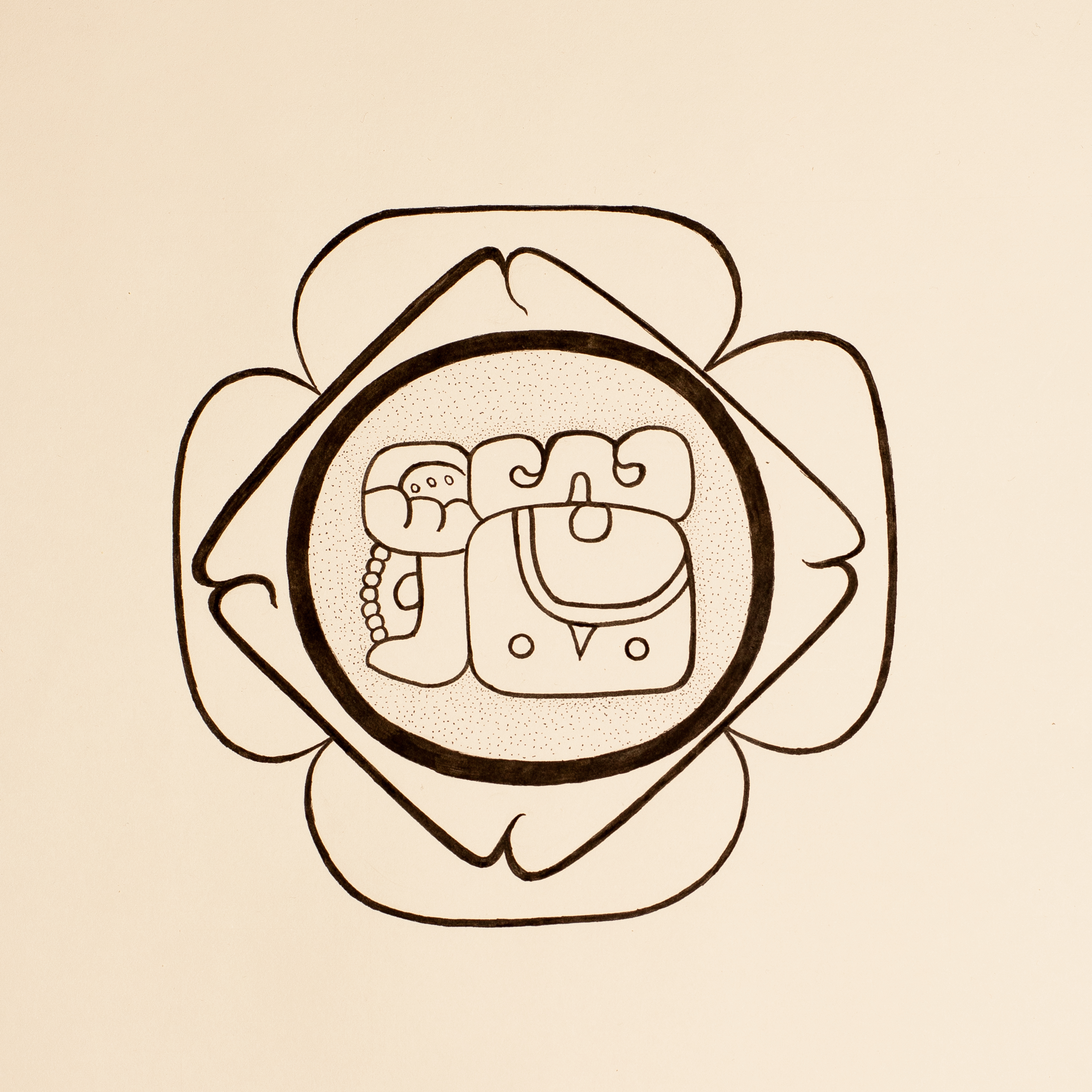
El ruk’u’x es un núcleo. Es el corazón de lo existente: la fuerza animadora de las personas, de las plantas, los animales, el agua, los elementos orgánicos y minerales y otros seres. Ruximik qak’u’x, la interconexión de los corazones, es la fusión de mente, cuerpo, y energía. Esta integridad se puede provocar a través de una energía interna que se proyecta, buscando interrelación con las entidades ‘externas’ a uno. Esto puedo suceder al acercarse al fuego, cuando el músico-danzante calienta la piel, los huesos, y las articulaciones de su cuerpo. Con el fin de calentar la mente, el músico-danzante se inclina para recibir el calor en la frente. También se abraza el fuego para que penetre en el núcleo de uno. Esta oscilación entre lo interno y externo sucede a través de estas prácticas, y otras, que constituyen el xajoj q’ojom y lo hacen un conducto de interrelacionalidad. Por lo tanto, el xajoj q’ojom es un acto de reciprocidad. Danzar es, como se describe en el Ati’t Xajoj, invocación y agradecimiento a través de una ofrenda corporal: “el cansancio, el esfuerzo y el ‘sudor’ del danzante son la ofrenda, el regalo, el homenaje a las energías del Cosmos, a los abuelos y abuelas” (30). De esta manera, los montajes escénicos cuentan una historia y, al mismo tiempo, revelan el ruximik qak’u’x ruk’a Kaj Ulew, la conexión de nuestra esencia con Cielo Tierra, una interdependencia que es la condición ineludible de nuestra existencia.
Otra forma de interrelación es la del cuerpo del músico-danzante con las energías del tiempo. Por ejemplo, el agrietamiento de las articulaciones de los cuerpos en movimiento, y otras manifestaciones corporales, son vías de dialogo con el ruk’u’x. Parte del entrenamiento de los músico-danzantes es percibir las articulaciones, los huesos, y otras partes del cuerpo en donde las veinte energías del Cholq’ij, el ordenamiento del tiempo (calendario maya), están marcadas en sus diferentes manifestaciones. Dentro de la filosofía maya, el tiempo también tiene ruk’u’x. Como se explica en Ati’t Xajoj, el Cholq’ij es un calendario lunar integrado por trece meses de veinte días. Ademas, “Cada uno de los veinte días se refiere a una energía concreta que se manifiesta en trece potencialidades a lo largo del ciclo completo” (Matul y Cabrera en Grupo Sotz’il 2015, 18). Estas veinte energías corresponden a entidades de la naturaleza, por ejemplo, animales, lugares, colores, elementos, y fenómenos, como es el anochecer, entre otros. Éstas tienen características “tanto energéticas como psicológicas y sociales” (Grupo Sotz’il 2015, 27) y están plasmadas en diferentes puntos del cuerpo, razón por la cual se le dice al ser humano jun winaq, conjunto de una veintena de energías. En el Ati’t Xajoj se explica que: “Danzar como acto sagrado, supone convertirse en un canal energético” que nos permite “…profundizar en cada Energía, en cada animal, en sus movimientos, sonidos…” (Grupo Sotz’il 2015, 27).
Todas las cosas en el cosmos tienen ruxuq’ab’il, fuerza energética. Por eso, los objetos-seres que acompañan las presentaciones del Grupo Sotz’il—las máscaras, los instrumentos musicales, los telares y textiles, el fuego, las resinas aromáticas, y sustancias—son objetos vivos. Los instrumentos y máscaras son hechos por los músicos-danzantes y son activados a través de la ritualidad y velados durante la noche anterior a una presentación. Estos objetos vivientes tienen, en su materialidad, una energía que se denomina q’aq’al, combustión resplandeciente en potencialidad. En el caso de los instrumentos musicales, también tienen otra energía al momento de soplarlos o tocarlos que se llama k’oxomal, vibraciones sonoras.
The ruk’u’x is a nucleus. It is the heart of that which exists: the animating force of people, plants, animals, water, organic and mineral elements and other beings. Ruximik qak’u’x, the interconnection of hearts, is the fusion of mind, body, and energy. This integrity can be brought about by an internal energy projected outwards as it seeks an interrelation with ‘external’ entities. This can happen when approaching the fire, when the musician-dancer warms their skin, their bones, and the joints of their body. Aiming to warm the mind, the musician-dancer leans into the fire to receive its warmth on their forehead. One also embraces the fire, so that it penetrates into one’s nucleus. This oscillation between the inner and outer happens through these practices, and others, which constitute xajoj q’ojom, and makes of it a conduit of interrelationality. As such, xajoj q’ojom is an act of reciprocity. As described in Ati’t Xajoj, dance is an invocation and an act of gratitude through corporeal offering: “the weariness, the effort and the ‘sweat’ of the dancer are the offering, the gift, the homage to the energies of the Cosmos, to the ancestors” (Grupo Sotz’il 2015, 30). In this way, the performances tell a story and at the same time reveal ruximik qak’u’x ruk’a Kaj Ulew, the connection of our essence with Sky Earth, an interdependence that is the inescapable condition of our existence.
Another form of interrelation is that of the musician-dancer’s body with the energies of time. For example, the moving body’s cracking of the joints, and other corporeal manifestations, are channels of dialogue with ruk’u’x. Part of the musician-dancer’s training is to perceive the joints, bones, and other parts of the body where the twenty energies of the Cholq’ij, the ordering of time (Mayan calendar), are marked in their different manifestations. Within Mayan philosophy, time also has ruk’u’x. As explained in Ati’t Xajoj, the Cholq’ij is a lunar calendar composed of thirteen months of twenty days. Furthermore, “each of the twenty days refers to a concrete energy that manifests through thirteen potentialities throughout an entire cycle” (Matul and Cabrera in Grupo Sotz’il 2015, 18). These twenty energies correspond to entities in nature, for example, animals, places, colors, elements, and phenomena such as twilight, among others. These have “energetic as well as psychological and social” characteristics (Grupo Sotz’il 2015, 27) and are embedded in different parts of the body. This is why the human being is referred to as jun winaq, a group of twenty energies. In Ati’t Xajoj it is explained that: “Dancing as a sacred act implies becoming an energetic channel” that allows us to “…deepen our understanding of each Energy, each animal, its movements, sounds …” (Grupo Sotz’il 2015, 27).
All things in the cosmos have ruxuq’ab’il, energetic force. Therefore, the object-beings that accompany Grupo Sotz’il’s performances—masks, musical instruments, looms and textiles, the fire, aromatic resins and other substances—are living objects. Instruments and masks are made by the musicians-dancers and are activated through ritual. Musician-dancers stay up with their instruments and masks the night before a presentation. These object-beings have, in their materiality, an energy called q’aq’al, a resplendent combustion that exists as potential. In the case of musical instruments, when they are played they also have another energy which is called k’oxomal, sound vibration.

Pero más allá del k’oxomal, los instrumentos, igual que las personas, emiten ch’ab’al y tzij, lenguaje y palabra, es decir el conocimiento. El tzij de los instrumentos es la música. Por ejemplo, hay composiciones que nosotros tocamos y con las cuales nos armonizamos con las energías de los ancestros. Esto pasa con la marimba. Tocamos piezas de cien años de antigüedad, los abuelos escuchan la marimba y les nace danzar, reír, llorar; las abuelas escuchan palabras en una música sin letra. Las melodías tienen tzij, las palabras que comunican conocimiento. Por eso se dice: “ojar rutzij q’ojom”—las antiguas palabras de la música.
But beyond the k’oxomal, the instruments, like people, emit ch’ab’al and tzij, language and word, that is to say, knowledge. The tzij of instruments is music. For example, there are compositions that we perform and with which we harmonize with the energies of the ancestors. This happens with the marimba. We play pieces that are a hundred years old. When the elders listen to the marimba, they are moved to dance, to laugh, to cry; the grandmothers hear words in music without lyrics. The melodies have tzij, words that communicate knowledge. That is why we say: “ojar rutzij q’ojom”—the ancient words of music.

Ronojel ruxumon ri’ ruk’a Kaj Ulew. Todo lo que existe en el Cielo y la Tierra está interrelacionado, formando la red de la existencia. Aunque no todos son capaces de percibirlo, hay quienes—según sus capacidades—pueden verlo, sentirlo y olerlo. Es decir, se percibe esa energía de la piedra, como se percibe la energía del fuego, del viento, del aire. Existen muchas formas de percepción. La percepción no se limita a los cinco sentidos que comúnmente se reconocen; podemos desarrollar muchos otros sentidos de percepción. El xajoj-q’ojom es ejemplo de esto; el músico-danzante se vuelve canalizador de energías. Somos un canal nada más; somos un canal que pasa la energía de Kaj Ulew, Cielo Tierra, hacia el público. O el músico-danzante simplemente pasa la energía del aire a la tierra con su movimiento y a través de la música. Por ejemplo, cuando el músico-danzante toca un instrumento de viento, es a la vez un proceso emocional e intelectual, así como físico. El aire es inhalado y exhalado, pasando a través de la cámara interna, o conducto, del instrumento. En esa transformación de una energía a otra, el aire sale como k’oxomal y tzij, vibración y palabra. Y esto, entonces, produce las condiciones para silonem, movimiento. La música hace que el cuerpo se mueva bajo un ritmo, una melodía: cuerpo, vibración y sonido se siguen, conectando y formando una red de energías.
Ronojel ruxumon ri ‘ruk’a Kaj Ulew / All that exists in Sky and Earth is interrelated, forming the web of existence. Though not all are able to perceive it, there are those who—according to their capacities—can see it, feel it, and sense it. That is to say, one feels the energy of stone, just as one percieves the energy of fire, wind, air. There are many forms of perception. Perception is not limited to the five senses that are commonly recognized; it is possible to develop many more senses of perception. Xajoj q’ojom is an example of this; the dancer-musician becomes a conduit of these energies. We are a channel, nothing more. We are a conduit that passes the energy of the Kaj Ulew, Sky Earth, towards the public. Or the dancer-musician simply passes energy from the air to the earth with movement and through music. For example, when the dancer-musician plays a wind instrument, it is an emotional and intellectual process, as well as a physical one. The air is inhaled and exhaled, passing through the instrument’s inner chamber or conduit. In that transformation from one energy to another, the air exits as k’oxomal and tzij, vibration and word. And this, then, produces the conditions for silonem, movement. The music causes the body to move under a rhythm, a melody: body, vibration and sound follow each other, connecting and forming a network of energies.

El entorno sonoro que se crea como parte íntegra de los montajes—ya sea en el escenario, en las montañas o en una plaza del pueblo—incluye vocalizaciones en kaqchikel. Éstas también son ejemplos de tzij, pero sus significados no son sólo semánticos. Tzij transmite k’oxomal, vibraciones, tanto a los cuerpos de los músico-danzantes como a los de la audiencia. El k’oxomal nos permite entrar en diálogo, nos abre a la experiencia de las conexiones entre nosotros y el cosmos, expresadas como qatzij ruk’a Kaj Ulew, nuestras palabras con Cielo Tierra. Esto enaltece nuestra percepción de la interconexión entre nosotros y los seres-objetos, los seres-instrumentos, y los seres agua, tierra, montañas y árboles. Esto es lo que se busca con el xajoj q’ojom. Primero el público sólo lo presencia; es testigo. Pero tras unos momentos, el público y los músico-danzantes trascienden: nuqaqasaj kimayej, las mentes se interpenetran.
The soundscapes that are created as an integral part of the performances—whether on the stage, in the mountains, or in a town square—include vocalizations in Kaqchikel. These are also examples of tzij, but their meanings are not just semantic. The tzij transmits k’oxomal, vibrations, both to the bodies of the musician-dancers and to those of the audience. K’oxomal allows us to enter into dialogue; it opens us to the experience of the connections between us and the cosmos, expressed as qatzij ruk’a Kaj Ulew, our words with Sky Earth. This heightens our perception of the interconnection between us and the object-beings, the instrument-beings, and the water, earth, mountain, and tree beings. This is what we strive for through xajoj q’ojom. First the audience is witness. But at a certain point, the audience transcends, as do the performers: nuqaqasaj kimayej, there is an interpenetration of minds.
5. Conclusión
5. Conclusion

En Ati’t Xajoj (Grupo Sotz’il 2015) se hace memoria del rub’eyal rub’ey qana’oj, camino filosófico-político que nos dejó nuestro fundador Tat Lisandro, cuando citamos sus palabras: “‘Nqarayij chi ronojel qasamaj nk’atzin chi ketemab’äl nk’aj chïk winaqi’—que todos nuestros esfuerzos se traduzcan en conocimiento del otro….” (26). El “conocimiento del otro” del cual habló Tat Lisandro no se refiere a una comprensión teórica, abstracta, o desincorporada. Al contrario, este conocimiento implica la “transformación del danzante en un conducto de energía a fin de entrar en la piel del mono” (27), o cualquier otro ser. Es decir, es un acto corporal y a la vez relacional. Entrar en la piel del otro es compartir qak’u’x, nuestro corazón, nuestra fuerza vital. Es una percepción de la condición de interdependencia en la cual existimos. No se trata de actos sobrenaturales; es una inteligencia ecológica, un reconocimiento de los lazos entre lo existente dentro de Kaj Ulew, Cielo-Tierra. Esto no es algo místico ni romántico; estas interrelaciones—en sus formas y calidades específicas—tienen consecuencias materiales y no siempre armoniosas. Además, estas interrelaciones e interdependencias estuvieron siempre presentes más allá de los momentos extraordinarios del xuklem o el xajoj q’ojom.
In the Ati’t Xajoj (Grupo Sotz’il 2015) we remember rub’eyal rub’ey qana’oj, the political-philosophical path left to us by our founder, Tat Lisandro, when we cite his words: “‘Nqarayij chi ronojel qasamaj nk’atzin chi ketemab’äl nk’aj chïk winaqi‘—may the totality of our efforts be translated into knowledge of the other….” (26). The “knowledge of the other” about which Tat Lisandro spoke does not refer to a theoretical, abstract, or disembodied understanding. On the contrary, this knowledge implies the “transformation of the dancer into a conduit of energy in order to enter the skin of the monkey” (27), or any other being. This is an act that is embodied and, at the same time, relational. To enter into the skin of another is to share qak’u’x, our heart, or vital force. This is a perception of the condition of interdependence in which we exist. These are not supernatural acts; this is an ecological intelligence, a recognition of the ties between all that exists within Kaj Ulew, Sky Earth. This is not something mystical or romantic; these interrelations—in their specific forms and qualities—have material and not always harmonious consequences. What is more, these relationalities and interdependencies were already present beyond the extraordinary moments of the xuklem or of xajoj q’ojom,.

Lanzar una semilla de maíz al pavimento o tratar el maíz y otras cosas con descuido son actos denominados xajanïk, acciones en relación a otros que dan lugar a consecuencias no deseadas; por ejemplo, faltar el respeto al maíz al dejar semillas en el suelo (sin sembrar) resulta en pobreza. Otros ejemplos de xajanïk incluyen: señalar a la luna llena o a una calabaza madura en la vid (que da lugar a su putrefacción prematura); pisar una cuerda cuando una está embarazada (lo que resulta en cordón umbilical enredado y asfixia del recién nacido); tener relaciones sexuales en cementerios, sitios ceremoniales, o cerca de ríos (lo que resulta en muerte); y muchos más. Xajanïk son admoniciones acerca del cuerpo en relación a objetos externos—maíz, cuerdas, la luna, ríos, cadáveres y muchas otras cosas. Toda acción relacional repercute en algo, ya sea en la misma persona o en una flor que nace de la relación; es decir la repercusión puede tocar a otro ser dentro del entorno del que transgrede el xajanïk. Ruximik qak’u’x, la interconexión de nuestros corazones, no es sólo una posibilidad. Ya está y siempre estuvo presente entre nosotros y todo lo existente, aunque no todos lo percibamos. Como tal, esa relacionalidad no es sólo deseable; es ineludible y puede producir efectos no deseados. Si no percibimos ruximik qak’u’x ¿cúales son las consecuencias?
The throwing of a maize seed on the pavement or treating maize and other things with carelessness are acts referred to as xajanïk, actions in relation to others that give rise to unwanted consequences; for example, disrespecting maize by leaving seeds on the ground (unplanted) results in poverty. Other examples of xajanïk include: pointing to the full moon or to a ripe squash on the vine (resulting in premature putrefaction); stepping on a rope when one is pregnant (resulting in a tangled nuchal cord and infant asphyxia); having sexual relations in cemeteries, ceremonial sites, or near rivers (resulting in death); there are many more. Xajanïk are admonitions about the body in relation to external objects—maize, ropes, moon, rivers, corpses and many other things. All relational acts have an effect on something, either on the same person or on the flower that is born from the relational action; that is to say, the repercussion can touch another being within the space of whomever transgresses the xajanïk. Ruximik qak’u’x, the inter-connection of our hearts, is not only a possibility. It is already and always present, although not all perceive it. As such, this relationality is not only desirable, it is also inescapable and can produce effects that are not desired. If we do not perceive ruximik qak’u’x, what are the consequences?

los tenamastes que estaban en el fuego se lanzaron con ímpetu
a sus cabezas.
Así fue pues, la destrucción de esa gente… (41).
No reconocer el protagonismo de todos los seres y seres-objetos puede desencadenar consecuencias nocivas. La peligrosa suposición de que la materia es inerte, pasiva y que no es ‘materia‘ de importancia para los asuntos humanos ya está dando lugar a efectos nocivos, a niveles ecológicos y corporales, que al final son lo mismo. Estos incluyen la presencia de residuos de antibióticos, plásticos, farmacéuticos, plaguicidas, y hormonas sintéticas en los océanos y los ríos—así como en la sangre, la leche materna y otros líquidos corporales de casi todos los mamíferos del planeta.5 Y el maíz, sustento de nuestros pueblos, ya ha sido transgredido con modificaciones genéticas que traen consecuencias fatales, no sólo para los humanos, sino también para especies vegetales y animales, incluyendo abejas y otros insectos polinizadores. Los objetos de nuestra fabricación escapan a nuestra capacidad de controlarlos. A pesar de ser categorizados como seres inertes, de igual modo, tienen la capacidad de afectarnos de manera inesperada e indeseada. Estos efectos también son manifestaciones de la relacionalidad radical e ineludible que está en el corazón de la práctica del Grupo Sotz’il. A través de xuklem, a través del xajoj q’ojom, reconocemos el volcán, el viento, las piedras, las máscaras, los ríos y los mares, y todo lo demás. Juntos buscamos la comunicación y el equilibrio. A través de nuestras ofrendas y meditación, y por medio del xajoj q’ojom, recordamos el ruximik qak’u’x, nuestra interrelacionalidad ineludible con Kaj Ulew. Al observar el presente y reflexionar sobre el futuro, preguntamos ¿qué palabras y visiones, qué prácticas, qué movimientos y cantos se requerirán para mantener el equilibrio y realizar formas recíprocas de cuidado y convivencia? Wakami nqaya’ kan itzij, xtiya’ ta jun ka’i’ oxi’ tzij pa ruwi’ k’aslemal, xtiya’ ta jun paj ka’i’ paj itzij, xkixna’ojin ta, xkixmayon ta. Y ahora le pasamos la copa a ustedes, dejándoles la próxima palabra; ahora les toca ofrendar una, dos, tres palabras…
the three stones that were in the fire hurled themselves with impetus
aiming at their heads…
This is how those people were destroyed…(41).
Not recognizing the agency of all beings-objects and objects-beings can unleash noxious consequences. The dangerous assumption that matter is inert, passive, and of no matter to human affairs is already resulting in ecological and bodily effects—which in the end, are the same thing. These include the presence of antibiotic, pharmaceutical, pesticidal, hormonal, and plastic residues in the oceans and rivers—as well in the blood, mother’s milk, and other bodily fluids of almost every mammal on the planet.5 And our maize, sustenance of our peoples, has already been transgressed with genetic modifications that bring fatal consequences, not only to humans, but to diverse plant and animal species, including bees and other pollinators. The objects of our manufacture escape our ability to control them. Even if we deem them inert, they have the capacity to impact us in unexpected and undesired ways. These effects are also manifestations of the radical and inescapable relationality that is at the core of Grupo Sotz’il’s practice. Through xuklem, by way of our xajoj q’ojom, we recognize the volcano, the wind, the stones, the masks, the rivers and seas, and everything else. Together, we seek communication and balance. Through our offerings and meditation—and through xajoj q’ojom—we remember ruximik qak’u’x, our inescapable inter-relationality with Kaj Ulew, Sky Earth. Observing the present, and reflecting on the future, we ask: what words and visions, what practices, what songs and movements will be required to maintain balance and to realize reciprocal forms of care and conviviality? Wakami nqaya’ kan itzij, xtiya’ ta jun ka’i’ oxi’ tzij pa ruwi’ k’aslemal, xtiya’ ta jun paj ka’i’ paj itzij, xkixna’ojin ta, xkixmayon ta. And now we pass the cup to you, leaving you with the next word; it is now up to you to offer one, two, and three words…
Works Cited
Anonymous. Memorial de Sololá, Anales de los cakchiqueles. Translated by Adrián Recinos. Título de los señores de Totonicapán. Translated by Dionisio José Chonay. Fondo de Cultura Económica. 1950 (1980).
Anonymous. Codex Dresdensis, Akademische Druck- u. Verlagsanstalt (ADEVA). Color facsimile edition of the Maya Manuscript in the possession of Sächsische Landesbibliothek, Dresden. 78 pp. (74 with inscriptions). circa 1500 [1975]. Digital facsimile accessed through Foundation for the Advancement of Mesoamerican Studies (FAMSI), 25 February 2017. http://www.famsi.org/research/graz/dresdensis/index.html.
Castillo, Maria Regina Firmino. The Destruction and Regeneration of Worlds Through Performance. 2018. PhD Dissertation. 2018. 24 August 2018. https://pqdtopen.proquest.com/doc/2050074429.html?FMT=ABS.
Chinchilla Mazariegos, O. “Sounds in Stone: Song, Music, and Dance on Monument 21 from Bilbao, Cotzumalguapa, Guatemala.” The Pari Journal. 6(1):1-12. 2015. 23 February 2017. www.precolumbia.org/ pari/journal/1601.
Durán, Diego. The History of the Indies of New Spain (Codex Durán). Translated by Doris Heyden. University of Oklahoma Press, [1581] 1994.
Firmino Castillo, María Regina. “Dancing the Pluriverse: Indigenous Performance as Ontological Praxis.” Dance Research Journal, vol. 48, no. 1, 2016, pp. 55–73., doi:10.1017/S0149767715000480.
Grupo Sotz’il. Uk’u’x Ulew. KIWE/KAQCHIKEL: International Indigenous Cultural Exchange: Jalwachinïk na’ojilal b’anob’äl. 2014. https://vimeo.com/186359782.
Grupo Sotz’il. 2015. Ati’t Xajoj. Guatemala City, Guatemala: Cholsamaj.
Josefson, Deborah. “US Study Highlights High Levels of Plastic Compound in Humans.” BMJ: British Medical Journal 322.7289 (2001): 756. Web. 2 Feb. 2017. <https:// www.ncbi.nlm.nih.gov/pmc/articles/PMC1173267/>.
Kerr, J. Sotheby’s Catalogue. 7 June 2018. http://www.sothebys.com/en/auctions/ecatalogue/lot.256.html/2004/african-oceanic-and-pre-columbian-art-n08029.
Kerr, J. Maya Vase Data Base: An Archive of Rollout Photographs Created by Justin Kerr. 1999a. 22 May 2017. http://research.mayavase.com/kerrmaya.html.
Kerr, J. The Precolombian Portfolio. 1999b. 23 May 2017. http://research.mayavase.com/kerrportfolio.html.
Kettunen, H. and Helmke, C. Introducción a los Jeroglíficos Mayas. Traducción al español: Verónica Amellali Vázquez López y Juan Ignacio Cases Martín. Wayeb. 2010.
Koch, H. M., and Calafat, A.M. “Human Body Burdens of Chemicals Used in Plastic Manufacture.” Philosophical Transactions of the Royal Society: Biological Sciences 364.1526 (2009): 2063–2078. PMC. Web. 2 Feb. 2017. <https://www.ncbi.nlm.nih.gov/ pmc/articles/PMC2873011/>.
Looper, M. To Be Like Gods: Dance in Ancient Maya Civilization. University of Texas Press. 2009.
Massart, Francesco et al. “Chemical Biomarkers of Human Breast Milk Pollution.” Biomarker Insights 3 (2008): 159–169. 2 Feb. 2017. <https://www.ncbi.nlm.nih.gov/pmc/ articles/PMC2688366/>.
Sam Colop, Luis Enrique (trans). Popol Wuj — Versión Poética K‘iche. Guatemala: PEMBI/GTZ/Cholsamaj. 2008.
Sotz’il Jay. Xul Kek: La Ocarina. Grupo Sotz’il Música y Danza Maya Kaqchikel: Wachib’äl, Documentales. Director, Víctor Manuel Barillas; Principal Actor, L. Lisandro Guarcax G. 2004. 23 July 2018. http://www.gruposotzil.org.gt/wachibalgaleria-multimedia/.
Notes